Getting Real Value From AI Coding Assistants
AI coding tools are useful when you give them context and keep them honest. Rules, small tasks and review make the difference.

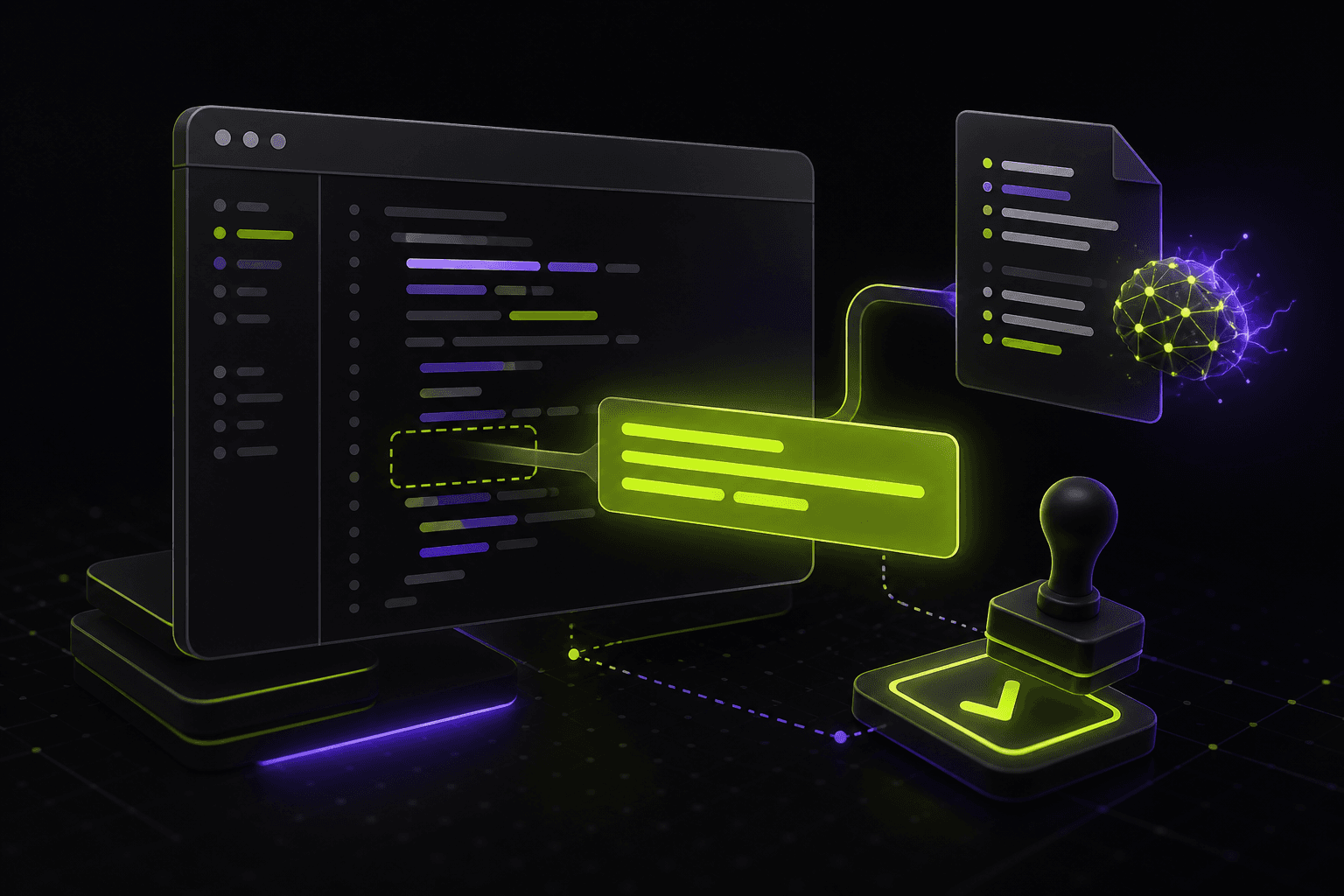
AI coding assistants can generate a component, refactor a module or explain unfamiliar code in seconds. They can also confidently produce code that uses an outdated API, ignores your project conventions or quietly changes behavior. The value you get depends less on the tool than on how you work with it.
Give it context. A short rules file describing the stack, folder structure, conventions and commands turns generic output into code that fits the project. Point it at the documentation for the versions you actually use; training data lags behind releases, and frameworks change.
Ask for small, verifiable steps. "Add a category filter to the blog page" produces a focused diff you can read. "Improve the blog" produces a rewrite you cannot review. Define what done looks like before starting: a passing type check, a test, a page that renders.
Review everything as if a new team member wrote it, because that is effectively the situation. Look for unnecessary abstractions, silent changes to unrelated code and invented APIs. Ask the assistant to explain a decision when something looks odd; the explanation often reveals a wrong assumption.
Keep ownership. The assistant accelerates the work; you remain responsible for correctness, security and design. Used this way, it is a strong pair programmer rather than a risky autopilot.