Automating the Boring Parts With n8n and Webhooks
Repetitive work between tools is a good candidate for automation. Webhooks and a workflow engine handle most of it without custom services.

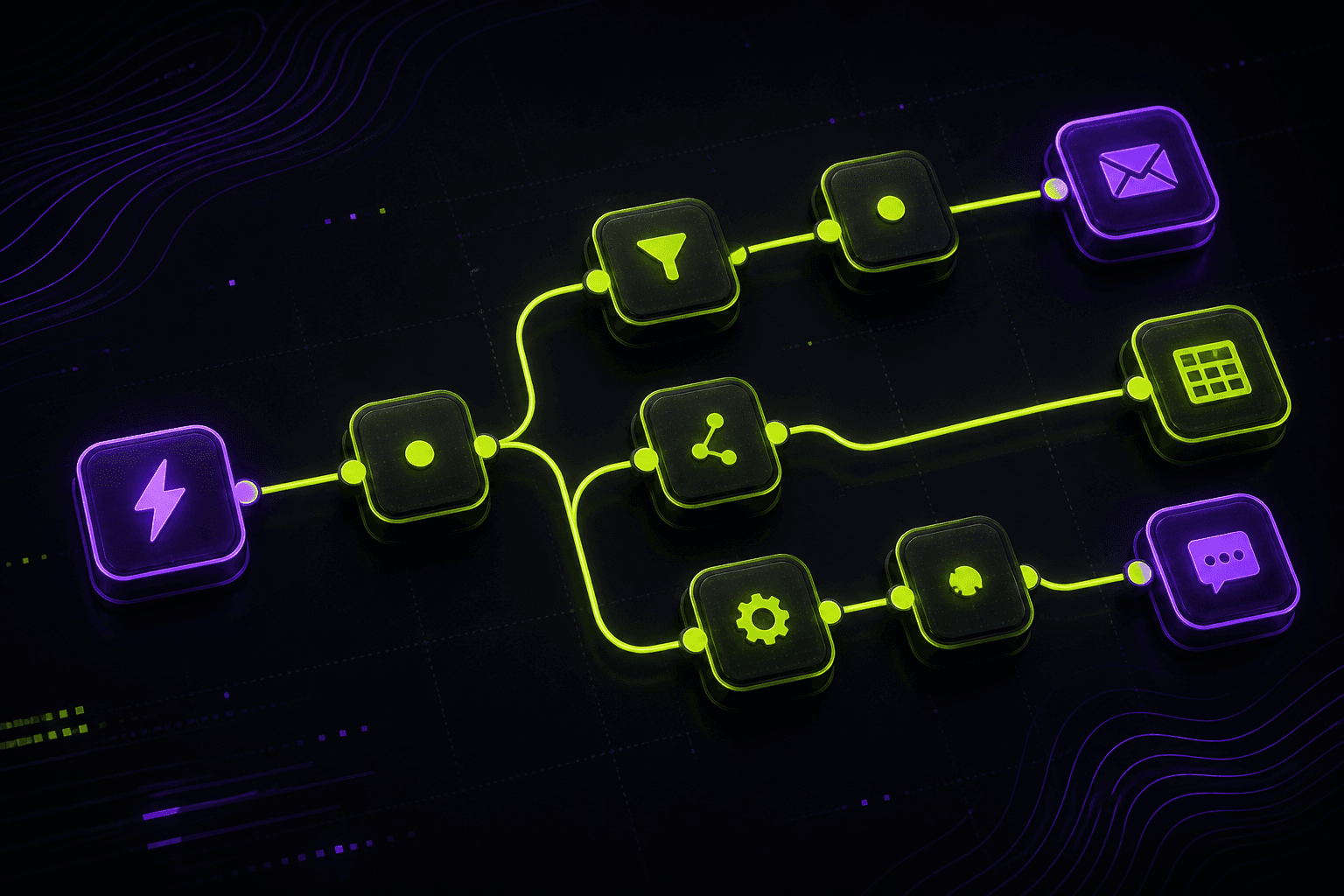
Every team has glue work: copying a form submission into a spreadsheet, posting a notification when a deal closes, syncing new customers into an email list. Writing and hosting a custom service for each one is overkill. A workflow tool such as n8n, driven by webhooks, covers most of these cases in minutes.
A webhook is simply an HTTP request that one system sends to another when something happens. Your application or SaaS tool posts a JSON payload to a URL; the workflow starts from that event. From there, nodes transform the data, call other APIs, branch on conditions and write results wherever they need to go.
Treat workflows like code even if they are built visually. Name them clearly, document what triggers them, and export definitions into version control. Use separate credentials for each integration and store them in the tool's credential manager rather than in node parameters.
Make workflows resilient. Verify webhook signatures so anyone who finds the URL cannot trigger them. Handle duplicate deliveries, because most providers retry. Add error branches that notify someone when a step fails instead of failing silently.
Know when to graduate. When a workflow needs complex logic, heavy data volumes or strict latency, move it into application code. Automation tools are excellent for the long tail of integrations and poor substitutes for a core system.